
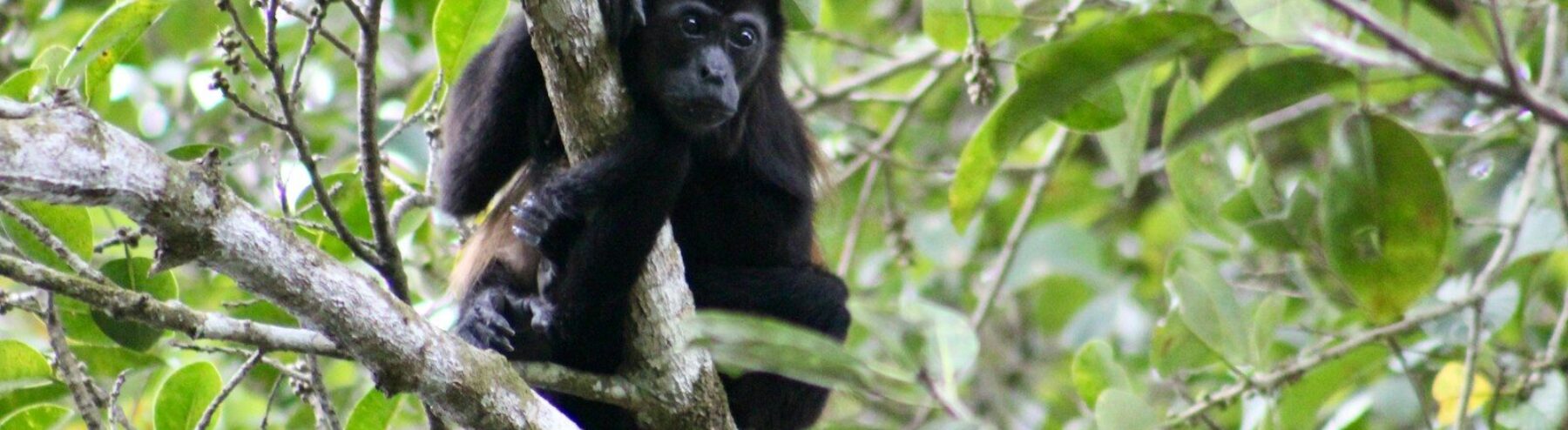
Akumal Monkey Sanctuary: Rescue, Rehab and Sponsor a Monkey
The Monkeys Nobody Could Keep
How a sanctuary in Akumal cares for rescued primates for the rest of their lives, and how you can help care for one from $15 a month.
A baby spider monkey looks like the perfect pet. Small, curious, holding on with that long tail.
But it doesn’t stay a baby. It grows into a wild primate that can live for decades, and often it can never return to the forest.
Many of those monkeys end up at Akumal Monkey Sanctuary & Rescued Animals. Here they get specialized care, a diet built for them, other monkeys to live with, and a permanent home.
Who they are
The sanctuary works with Fundación Santuario Akumal, a nonprofit for wildlife harmed by human activity, and with PROFEPA, Mexico’s federal environmental agency. According to the foundation:
- About 250 rescued animals from more than 40 species live at the sanctuary.
- It completed the first successful spider monkey rehabilitation and release in Quintana Roo.
The residents include 41 Mexican primates: 34 spider monkeys and 7 howler monkeys. Both species are endangered in Mexico.
A pet for a few years, a commitment for decades
Spider monkeys face two main threats: losing their forest, and being sold as pets. Capturing a baby often means killing its mother.
Chacho spent more than 20 years in a small wire cage with nothing to climb, kept by a private owner in Barra de Navidad. After a call to the sanctuary in 2019, PROFEPA moved him to Akumal. Today he’s a gentle, elderly monkey who loves lying in the sun. He’s missing teeth, so his food is softened, and he gets geriatric veterinary care. Two decades in a cage, and he’s still curious about everything.
Renata, a black howler monkey, was found in a home in Quintana Roo in April 2026. She was tied to a block with a harness, with no shade, food or water. She had been fed mostly mango and banana, and she arrived malnourished, anemic and weak. Her recovery is slow. For now she lives in a calm, quiet space, eating tender leaves, fresh vegetables and chicozapote, her favorite, until she’s strong enough for a larger enclosure.
Many animals like them can’t return to the wild. They need care for the rest of their lives, and someone has to provide it.
Rescue and rehabilitation
The sanctuary’s clinic also treats wild animals hurt by roads, power lines and shrinking habitat.
Amperio, a spider monkey, was electrocuted in Playa del Carmen in 2019. He survived about ten days on his own with severe burns before he was found, and he lost a leg and an arm. After months of therapy, he joined a group of 13 spider monkeys. Today he’s one of the most active in his group, and he looks out for old Chacho.
Kevin, a black howler monkey rescued in 2019, has his own shelter. He has learned to step onto the scale and into his carrier on his own, which makes his checkups calmer.
Some stories end back in the forest. In 2025, a spider monkey named Maya finished a year of rehabilitation and was gradually released into the wild.
Every day is planned around the animals. Each monkey’s diet is based on its metabolism, enclosures are built to feel as close to the forest as possible, and caregivers keep minds and bodies busy with climbing, foraging and problem-solving challenges.
What lifelong care costs
Caring for the sanctuary’s 41 primates costs about $285,000 MXN a month, roughly $15,000 USD.
That pays for three specialist veterinarians, preventive, geriatric and behavioral medication, a nutritionist, food, kitchen staff, an animal behavior specialist, and the caregivers who look after the monkeys every day. This is what a “pet” monkey really needs, and it never stops.
Sponsor a monkey for about $20 a month
Through the foundation’s Apadrina un Mono (Sponsor a Monkey) program, you choose one of the sanctuary’s monkeys and help cover its food, veterinary care and wellbeing. For about $20 US a month, you help care for a monkey who will need it for life.
Sponsors join La Comunidad del Mono and receive a personalized certificate, their monkey’s story with photos, and an exclusive newsletter. Higher levels add a visit to meet your monkey after the first year.
Monkeys looking for sponsors include Amperio, Chacho, Renata and Kevin.
To sign up: go to here, choose your monkey and click Apadríname. You can pay monthly or yearly, in dollars or pesos.
It also makes a great gift for anyone who fell for the monkeys on their last trip.
Plan your visit
The best way to understand this work is to see it. Bilingual guides walk you through the sanctuary and share how each animal got there. The sanctuary says its tours are educational, with no forced interaction, and carry one message: wild animals aren’t pets. Every ticket supports the animals’ care.
Prices in Mexican pesos, as of November 2026:
- Akumal Monkey Sanctuary Tour: MX$1,400 adults, MX$1,000 kids 5 to 11, free for 4 and under. Three hours, with a conservation talk, time with macaws and snakes, and purified water. You can add a swim in Cenote Ma’ax, and booking early can save up to 20%.
- Residents’ tour (Recorrido Santuario): MX$980 adults, MX$700 kids 5 to 11, with an INE or Quintana Roo residency card. Daily at 10 a.m., noon, 1 p.m. and 2 p.m.
- VIP Sanctuary Experience: from MX$3,200, 5 hours, ages 5 and up. Adds flamingos, zebras, a buffet and a cenote swim.
- ATV Monkey Tour: from MX$2,880, 5.5 hours, ages 5 and up. Adds a jungle ride to a cenote.
Good to know
- Arrive 20 minutes early. Late arrivals lose their spot, with no refund.
- Wear a shirt with sleeves, and use biodegradable repellent and sunscreen.
- Bring a swimsuit, towel and water shoes if you add a cenote.
- No drinking beforehand. Guests under the influence aren’t admitted.
Book at akumalmonkeysanctuary.com/tours.
More ways to help
- Donate by PayPal or bank transfer, or send supplies from the foundation’s Amazon wish list. Details are on the donations page.
- Volunteer with feeding, diet prep, enrichment and cleaning. You’ll need to be 18 or older and give three full days in a row, or one day a week for a month. See the volunteering page.
- Never buy a wild animal, in person or online.
- Know of a pet monkey? Contact PROFEPA. The sanctuary can’t take animals from private owners without PROFEPA’s approval.
Contact information
Akumal Monkey Sanctuary & Rescued Animals
- Address: Camino a Uxuxubi S/N, Predio Santa Pilar, 77776 Akumal, Quintana Roo (map)
- Phone: +52 984 123 1084
- WhatsApp: +52 984 130 9804
- Email: info@akumalmonkeysanctuary.com
- Website: akumalmonkeysanctuary.com
- Instagram: @akumalmonkeysanctuaryofficial
- Facebook: Akumal Monkey Sanctuary
Fundación Santuario Akumal
- Website: fundacionsantuarioakumal.org
- Email: dgeneral@fundacionsantuarioakumal.org
- Adopt a monkey: Apadrina un Mono
- Instagram: @fundacionsantuarioakumal
- Facebook: Fundación Santuario Akumal
Visiting the monkeys on your next trip, or already sponsoring one? Ask us anything before you go: hola@akumalMX.com