
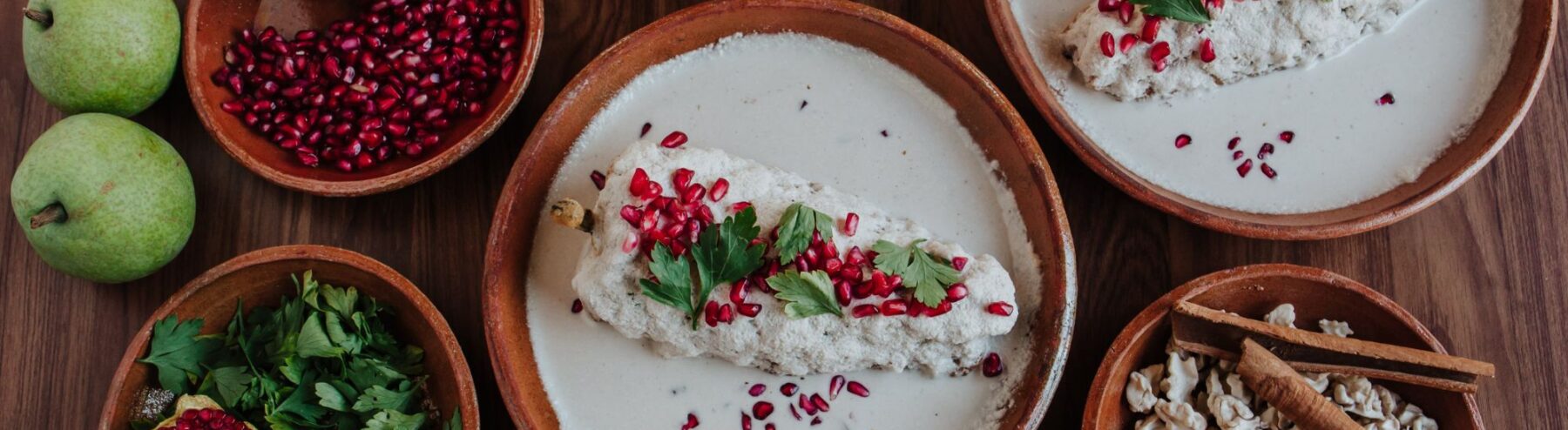
Chiles en Nogada for Mexico Independence Day History and Recipe
Why Chiles en NogadA Taste Like ¡Viva México!
Every September, plazas across Mexico light up in green, white, and red as families gather for El Grito the night of September 15 and civic parades on September 16, Mexico’s Independence Day. Traditions vary—some communities host kermeses with games and live music, others serve pozole or pambazos—but there’s one seasonal dish you’ll spot from coast to capital that captures the flag’s colors on a plate: chiles en nogada.
A Brief History: From Puebla, 1821, to Today
Most historians trace the dish to Puebla in 1821, when nuns (often credited to the Santa Mónica convent) prepared a celebratory meal for Agustín de Iturbide and the Army of the Three Guarantees after the signing of the Treaty of Córdoba. They dressed roasted poblano chiles (deep green) with a rich walnut sauce (white) and pomegranate seeds (red)—a patriotic color palette mirroring the freshly adopted national flag.
Seasonality is part of its identity. The traditional walnut (nuez de Castilla) and pomegranate harvest align perfectly with late summer and early fall, so chiles en nogada appears for a short window—right when Mexico celebrates independence.
Over two centuries, the recipe has traveled and evolved. In fine-dining rooms you’ll find “deconstructed” versions; in home kitchens you might see lighter, un-battered chiles; and in modern takes, cooks adapt the filling for vegetarian or vegan guests while keeping the fruit-and-spice soul of the original picadillo. What endures is the symbolism—and that unmistakable mix of savory, sweet, and aromatic spices that turns dinner into a celebration.
Modern Presentations You Might See
- Un-battered or baked versions for a lighter finish.
- Vegetarian/Vegan picadillo with mushrooms, lentils, and nuts.
- Regional swaps when fresh walnuts are scarce (some cooks use a portion of pecans) while keeping the sauce creamy and gently sweet.
- No-fry plating with warmed chiles, room-temperature nogada, and generous pomegranate for crunch and brightness.
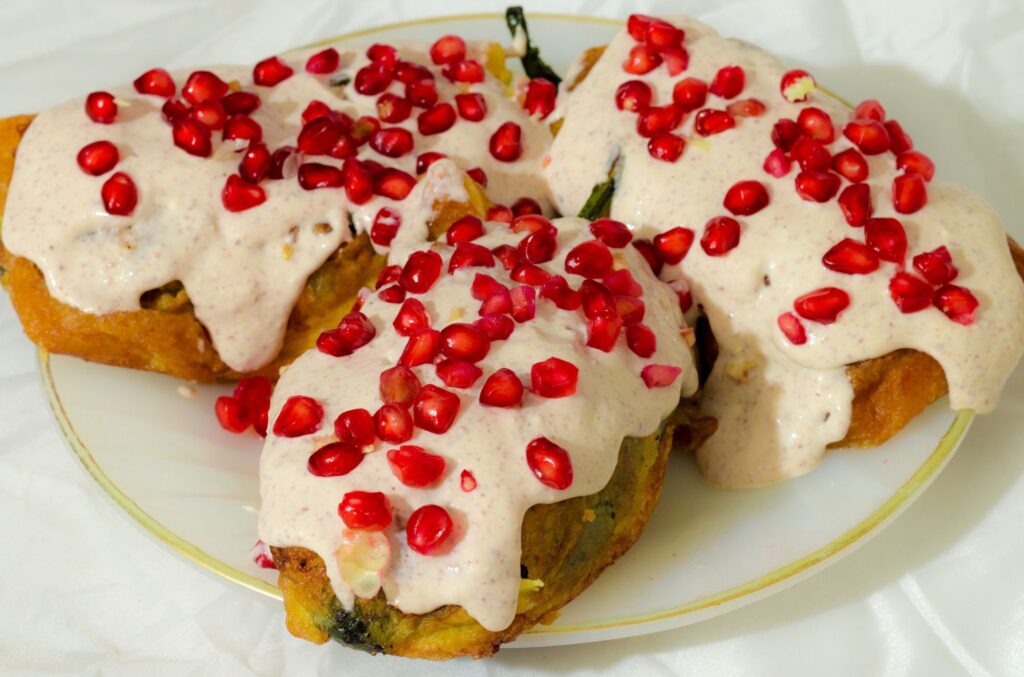
Traditional Chiles en Nogada (Serves 6)
Timing: ~1½–2 hours, plus walnut prep
Difficulty: Intermediate (mostly chopping and gentle frying)
Tip on sustainability: Classic recipes call for acitrón (crystallized biznaga cactus). Because biznaga is protected, do not use acitrón. Substitute finely diced candied papaya or omit.
Ingredients
For the chiles
- 6 large poblano chiles, whole with stems
- Neutral oil (for frying, if battering)
For the picadillo (filling)
- 2 Tbsp lard or neutral oil
- 1 small white onion, finely diced
- 2 cloves garlic, minced
- 600 g (about 1⅓ lb) ground pork and/or beef (traditional is pork or a mix)
- 2 medium ripe tomatoes, peeled and chopped (or 1 cup tomato purée)
- 1 firm green apple (e.g., Granny Smith), small dice
- 1 pear, small dice
- 1 peach, small dice
- ½ small ripe plantain, small dice (optional but classic)
- ¼ cup raisins
- ¼ cup slivered almonds, lightly toasted
- 2–3 Tbsp candied papaya, finely diced (see sustainability note)
- 1 small cinnamon stick (or ½ tsp ground)
- 2 whole cloves, lightly crushed (or a pinch ground)
- Pinch nutmeg and black pepper
- 1 bay leaf + a few thyme sprigs
- 1–2 Tbsp piloncillo (or brown sugar), to taste
- 1–2 Tbsp Jerez/sherry or white wine (optional)
- Salt, to taste
For the nogada (walnut sauce)
- 1 cup (about 120 g) fresh walnuts, skins removed (see prep)
- 1 cup Mexican crema (or sour cream)
- ½ cup milk (adjust for thickness)
- 100 g queso fresco or requesón, crumbled
- 1–2 Tbsp sugar (to taste)
- 1–2 Tbsp Jerez/sherry (optional)
- Pinch cinnamon
- Salt, to taste
For the capeado (optional batter)
- 4 eggs, separated
- Flour for dusting
To garnish
- Seeds from 1 pomegranate
- Small bunch flat-leaf parsley (leaves only)
Walnut Prep (Key Step)
- Cover walnuts with hot water for 10 minutes; drain.
- Peel the thin brown skins (this prevents bitterness).
- Soak peeled walnuts in milk for 15 minutes; drain and pat dry.
Roast & Prepare the Chiles
- Char poblanos over a flame or under a broiler until blistered on all sides.
- Transfer to a covered bowl or bag to steam 10 minutes.
- Peel off skins. Make a small slit along one side, keep the stem, and carefully remove most seeds and veins.
Make the Picadillo
- In a wide pan, heat lard/oil over medium. Sauté onion until translucent; add garlic for 30 seconds.
- Add meat; cook until just browned.
- Stir in tomatoes; simmer 3–4 minutes.
- Add diced apple, pear, peach (and plantain if using), raisins, almonds, and candied papaya.
- Season with cinnamon, cloves, nutmeg, pepper, bay leaf, thyme, piloncillo, and salt. Splash in sherry if using.
- Simmer 10–15 minutes until thick, glossy, and balanced (savory with gentle sweetness). Adjust salt/sugar to taste. Remove bay leaf and thyme. Let cool slightly.
Make the Nogada
- Blend peeled walnuts, crema, milk, queso fresco, sugar, sherry (if using), cinnamon, and a pinch of salt until smooth and spoonable.
- Adjust thickness with a bit more milk if needed; it should coat the back of a spoon. Taste for gentle sweetness and salt.
Fill & (Optionally) Batter
- Stuff each chile with warm picadillo; close the slit (toothpicks help).
- For capeado (classic):
- Whip egg whites to stiff peaks; gently beat yolks and fold in.
- Dust chiles lightly with flour.
- Dip in egg batter and fry in hot oil until golden on all sides. Drain on paper towels.
- Lighter option: skip batter and simply warm stuffed chiles in a 350°F/175°C oven for ~8–10 minutes.
Plate the Flag
- Place a warm chile on the plate. Spoon cool or room-temperature nogada generously over the top.
- Shower with pomegranate seeds and parsley leaves.
- Tradition serves this dish warm chile + cool sauce for contrast.
Make-Ahead & Serving Tips
- Roast/peel chiles and make the picadillo 1 day ahead; rewarm gently before stuffing.
- Nogada is best the day of (walnuts can thicken and darken).
- Pair with a dry rosé, a light white like Chenin Blanc, or a simple agua fresca.
Where Tradition Meets the Riviera Maya
Here in Akumal and around the Riviera Maya, many kitchens present chiles en nogada during the Independence Day season. Whether you prefer the classic capeado or a lighter, un-battered preparation, the spirit is the same: a short season, beautiful ingredients, and a plate that truly says ¡Viva México!
If you try this recipe at home, tag @AkumalVibes on Instagram—we’d love to see your Independence Day table.