
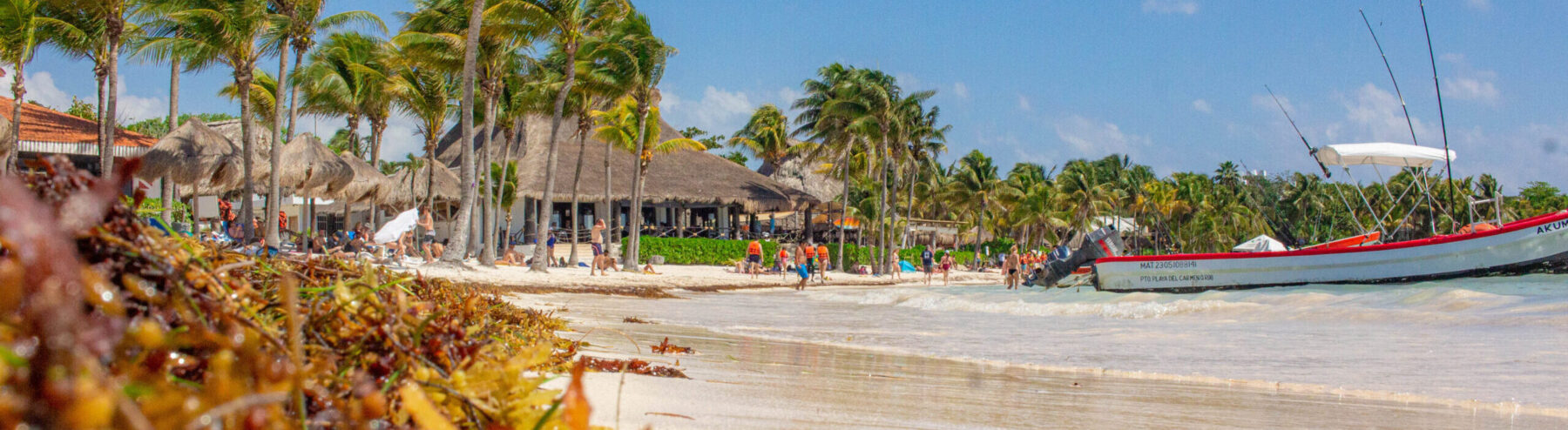
Sargassum Season in Riviera Maya: What to Expect and How to Enjoy Your Stay Year-Round
Sargassum is a natural phenomenon—a type of floating seaweed that drifts in from the Atlantic and can appear along the Caribbean coast during the warmer months of the year. It plays a vital role in the ocean’s ecosystem, but when it washes ashore in large amounts, it can affect the beach experience for travelers.
There’s no exact science to predicting sargassum. Some years, small blooms may start showing up in late April; in other years, they hold off until late May or even June. The severity and timing vary depending on ocean currents, weather, and temperature shifts, which means each season is a little different.
When Is Sargassum Most Common?
The peak months for sargassum in Riviera Maya are typically June through August. These are the warmest months in the Caribbean, and the changing currents during this period tend to bring in more seaweed.
That said, conditions can change quickly—even in the middle of summer. A north wind can blow in and clear the shoreline for a day or two, offering beautiful beach conditions and refreshing ocean breezes, even during peak season.
Why Location Makes a Difference
Not all beaches experience sargassum the same way. In fact, geography is a major factor in how much seaweed arrives and how quickly it can be cleared.
- Larger bays with open, curved shorelines, such as Akumal Bay, South Akumal, and Aventuras Akumal, allow currents to help move seaweed along, making them easier to maintain and clean.
- Smaller, north-facing bays tend to collect more sargassum as currents funnel it inward.
A good example is Half Moon Bay in Akumal: the southern end may occasionally be hit harder, while the northern side often stays clean and clear.
This is why locals and returning guests know the nuances of each beach—and why having local insight when booking can be so valuable.
Nature’s Reset Button: Storms and Shifting Currents
Summer weather in the tropics also brings tropical storms, which may sound like an inconvenience, but they often act as nature’s beach-cleaning system. Strong waves and shifting tides help break up sargassum mats and push them back to sea.
By the time September and October arrive, cooler temperatures and different current patterns help clear up the coast. These months often mark the beginning of a calmer, clearer season with less seaweed and beautifully refreshed beaches.
When Is the Best Time to Visit?
If avoiding sargassum is a top priority, your best chances for clear beaches are generally between late September and March. This period brings:
- Cooler sea temperatures
- More favorable currents
- Lower sargassum levels
- Consistently clean beaches across the region
Still, many guests continue to enjoy Riviera Maya year-round. Even in summer, properties located in protected bays, larger beachfronts, or elevated locations can offer a pleasant stay, with pools, rooftop views, and other amenities that make the most of every day—regardless of seaweed.
Travel Smart: Stay Informed
Because sargassum can change from one day to the next, the best advice is simple: ask before you arrive. Our guest services team and property managers monitor beach conditions closely and can offer real-time recommendations on where to swim, snorkel, or relax.
Whether you’re planning a winter getaway, a summer family vacation, or a fall escape with friends, knowing what to expect—and when—is the key to enjoying Riviera Maya’s beauty all year long.
Whether you’re planning a winter getaway, a summer family vacation, or a fall escape with friends, knowing what to expect—and when—is the key to enjoying Riviera Maya’s beauty all year long. For more information about Akumal’s natural habitat, beach conditions, and vacation planning tips, feel free to contact us at hola@akumalmx.com. We’re happy to share local insight to help you make the most of your stay.